Permanent Transformation: How Organisations Stay High‑Performing During Constant Transformation

And how Sysdoc help organisations shift from overwhelmed to adaptable.

Change is no longer a project. It is a permanent operating condition.

Organisations are modernising and restructuring at speed – technology innovations in AI, cloud, and cyber along with regulatory reform, cost pressures, and product innovation are landing all at once. Pair this with the constant focus on performance. How can organisations maintain high levels of performance whilst being in a state of continuous change?
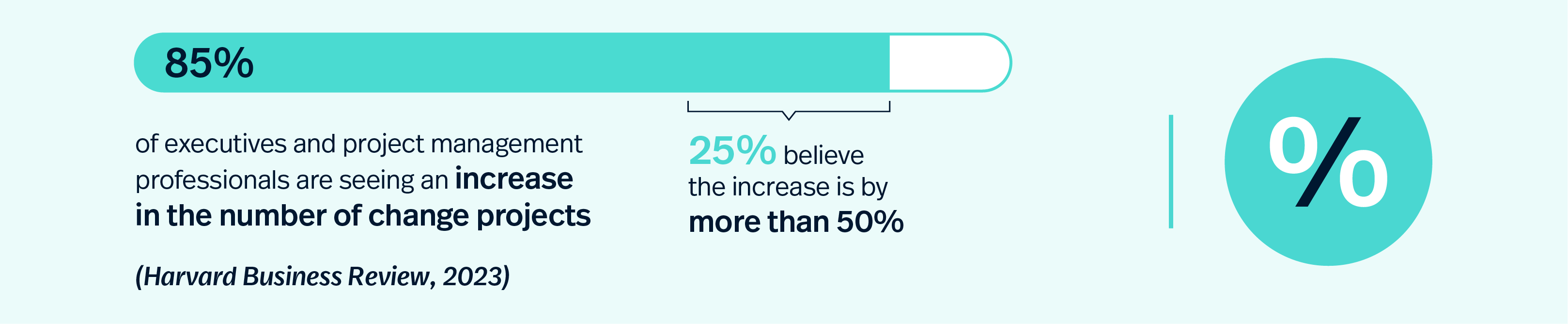
Organisations still using traditional project based models are experiencing fatigue, inconsistency, and delayed value – all impacting organisation and team performance.

The good news: these outcomes are avoidable. Organisations that reorientate their approach to change from episodic projects to an ‘always on’ capability are already stabilising adoption, protecting customer experience, and accelerating ROI and performance.

Why are organisations struggling to manage constant change?

Executives have been describing their current experiences with us, and there are a number of common themes being flagged:
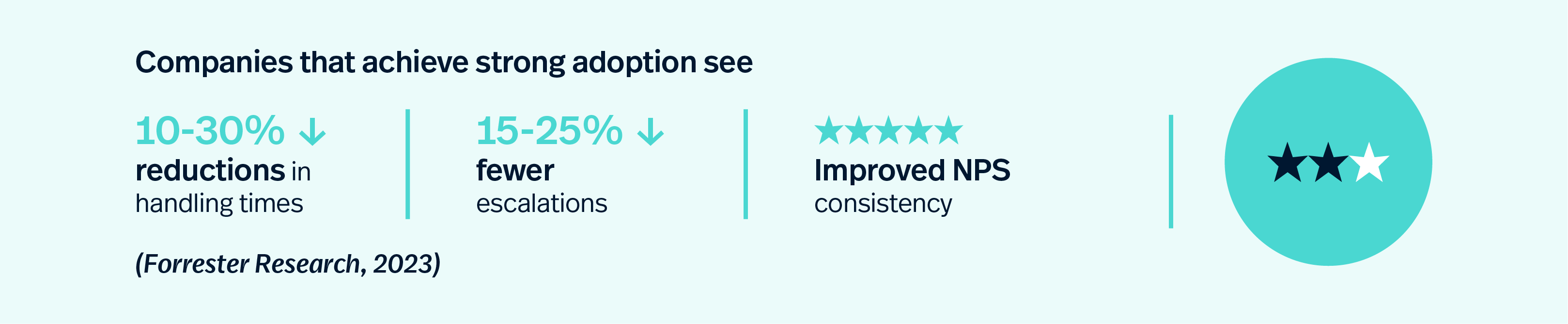
  • Capacity is overwhelmed at the coalface. Enterprise-wide change has tripled since 2018, while employee capacity has stayed flat (Gartner Workforce Trends, 2018). This is creating overload, with the same teams constantly absorbing overlapping initiatives – driving inconsistency, fatigue and uneven execution.
  • Willingness to support change is collapsing. As frequency, complexity and poorly executed change increase, employees’ readiness and sentiment to back new initiatives or their “change credit” has fallen sharply.
  • Change was unintentionally “delegated to everyone”. Agile ways of working created the expectation that squads, product owners and people leaders could “own” adoption – but change is a specialist discipline, and most employees aren’t trained change managers and change is not the primary element of their role. This created patchy quality, unclear ownership and inconsistent behavioural adoption across teams.
  • Leaders are flying on lag indicators. Slow, incomplete feedback loops mean leaders only see issues once KPIs and customer metrics deteriorate. Creating a gap between operational teams and strategic intent and weakening the organisational foundations needed for performance.
  • Process erosion creates data debt and risk. Moving at increased speed, without clear guidance and ineffective change management created sporadic adoption and has provided space for workarounds and duplicate processes, degrading data quality and increasing compliance and operational risk.
  • Customer experience absorbs the shock. When adoption lags performance suffers; escalations rise, repeat contacts grow, and handling times increase – placing frontline operational teams under pressure and eroding service quality.

  • Value leaks before benefits are realised. Within consistent adoption, benefit cases are slipping, remediation spending rises, and timelines drift – weakening the business case, decreasing ROI and ultimately impacting organisation and teams’ performance.

If this reads like your organisation, you’re not alone. Sysdoc has supported multiple large NZ enterprises (e.g., FMCGs, airlines, regulators, banks and in the public sector), and we’re seeing the same pattern: central strategy and change have set direction, but execution breaks down at the operational level where clarity, coordination, and confidence matter most.
What organisations are doing to adjust direction?

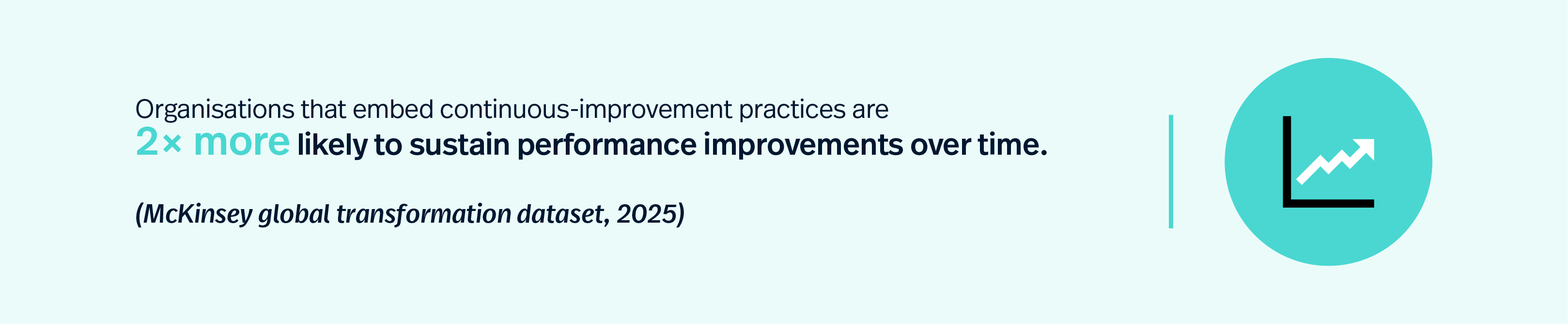
As organisations recognise that change is no longer a sequence of isolated projects – but a permanent, continuous flow, they are updating their operating models to match this new reality.

They are shifting to an operating model built for continuous improvement: one that can absorb frequent change, support rapid learning cycles, and consistently translate strategy into clear, executable actions for teams.

An updated operating model that crucially includes the right governance, team design and mindset to allow performance to thrive in a permanent change environment.
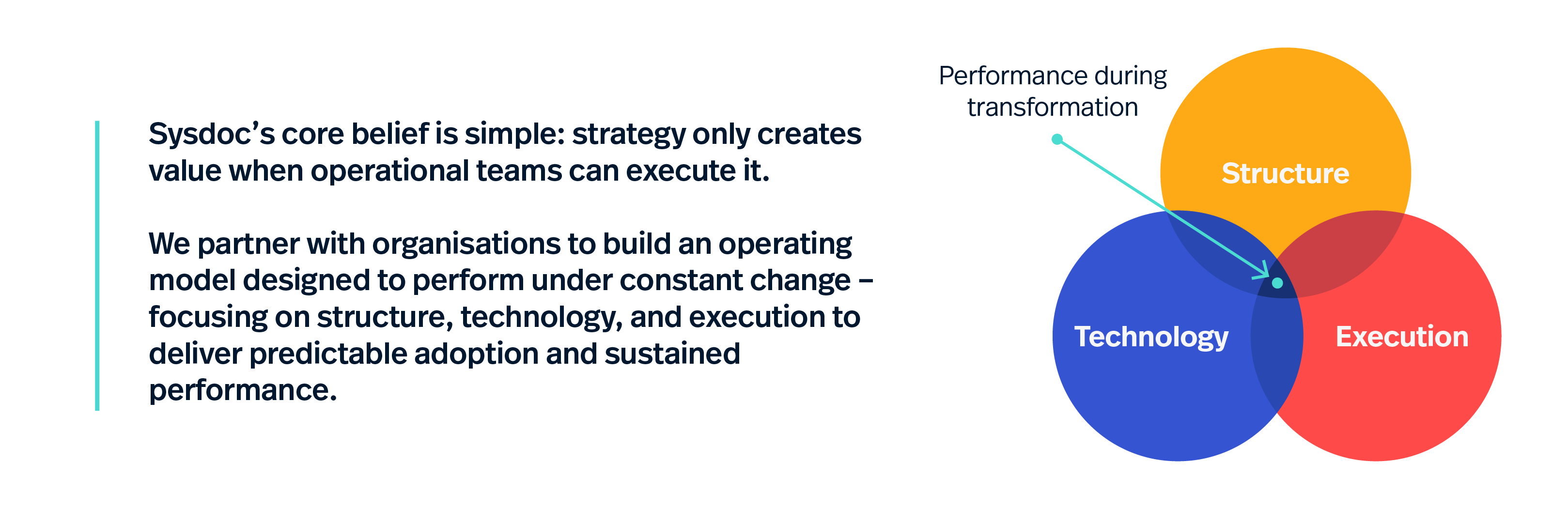
How Sysdoc has helped organisations go from episodic change and overwhelmed teams to always-on and adaptable?

Structure

Start treating change as a standing organisational capability and stop treating it as a service to projects.

  • Build governance to measure adoption, not just delivery milestones.
  • Plan change around impacted audiences to reduce fatigue and overlapping priorities.
  • Map role‑specific impacts so teams receive only the guidance they need, improving clarity and confidence.
  • Define ownership and decision rights for design, testing, readiness, and adoption to speed up execution and avoid bottlenecks.
  • Give leaders timely insight into readiness and sentiment so they can intervene earlier and prevent escalations.

Technology

Use Serendata to remove the biggest barrier to adoption: leaders can’t see readiness issues early enough to act.

Serendata brings every piece of change intelligence into one place, giving organisations real‑time visibility of how people are coping with change and where risks are emerging.

  • Keep change data and artefacts evergreen and audience‑specific, eliminating outdated documents, version sprawl, and siloed information.
  • Provide a single source of truth for adoption, combining real‑time analytics, change‑load visibility, and risk profiling so leaders can intervene before performance slips.
  • Surface readiness and sentiment signals automatically, helping leaders understand where teams need support and enabling targeted, timely action.
  • Reduce rework and stabilise delivery quality, ensuring changes land cleanly, consistently, and with less operational disruption.

Serendata strengthens the operating model by giving leaders the clarity, confidence, and early warning signals needed to support adoption in a permanent‑change environment.

Execution

Embed Change Managers directly into product teams, and operational functions to close the gap between strategy and day‑to‑day behaviour.

  • Coach leaders on effective adoption and interpreting readiness signals, turning insights into timely action.
  • Execute change in real operating conditions to reduce escalations and stabilise customer experience.
  • Create role‑specific support to lift adoption quality without increasing workload.

Why Sysdoc:

We’ve helped major organisations across NZ and globally build sustainable change capability after previous delivery models under‑performed. Our 30+ years delivering large‑scale transformation provides the tried and tested experience needed to close the strategy to execution gap and keep performance at the frontline.

In a world where change is constant, organisations don’t need more projects; they need an always‑on change capability built to support performance. Every month spent managing change the old way increases fatigue, rework, and value leakage.

Start reducing that risk now. Speak with Sysdoc about an operating model review that gives you clarity and steps forward within weeks.

No items found.

No items found.
No items found.

No items found.

Insights & News

Stay updated with Sysdoc's insights, events and news - dive into articles, trends, company updates, and thought leadership pieces.

No items found.

Register

Speak to our team

Get in touch with our team to see how we can help your business.

Peter Auckram
Head of Growth